
Last updated November 22, 2026
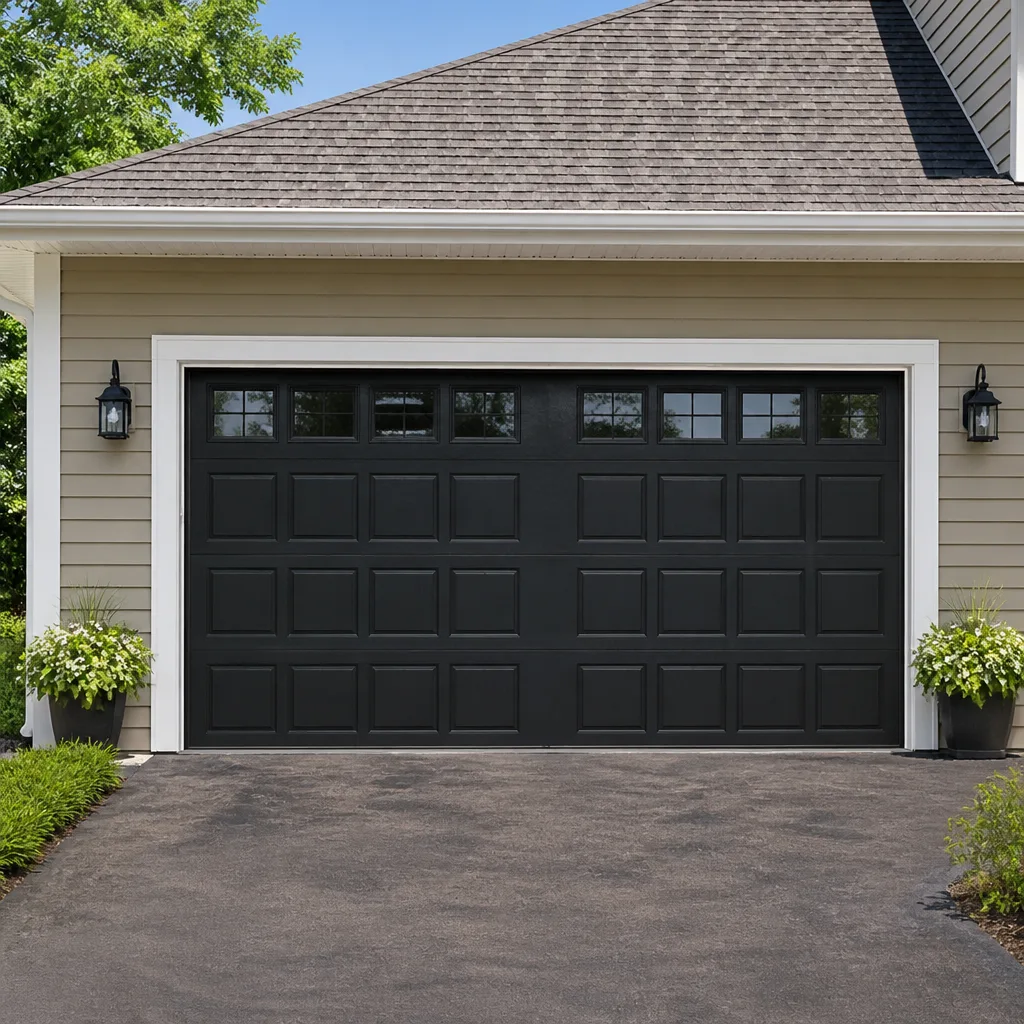 Raised-panel steel
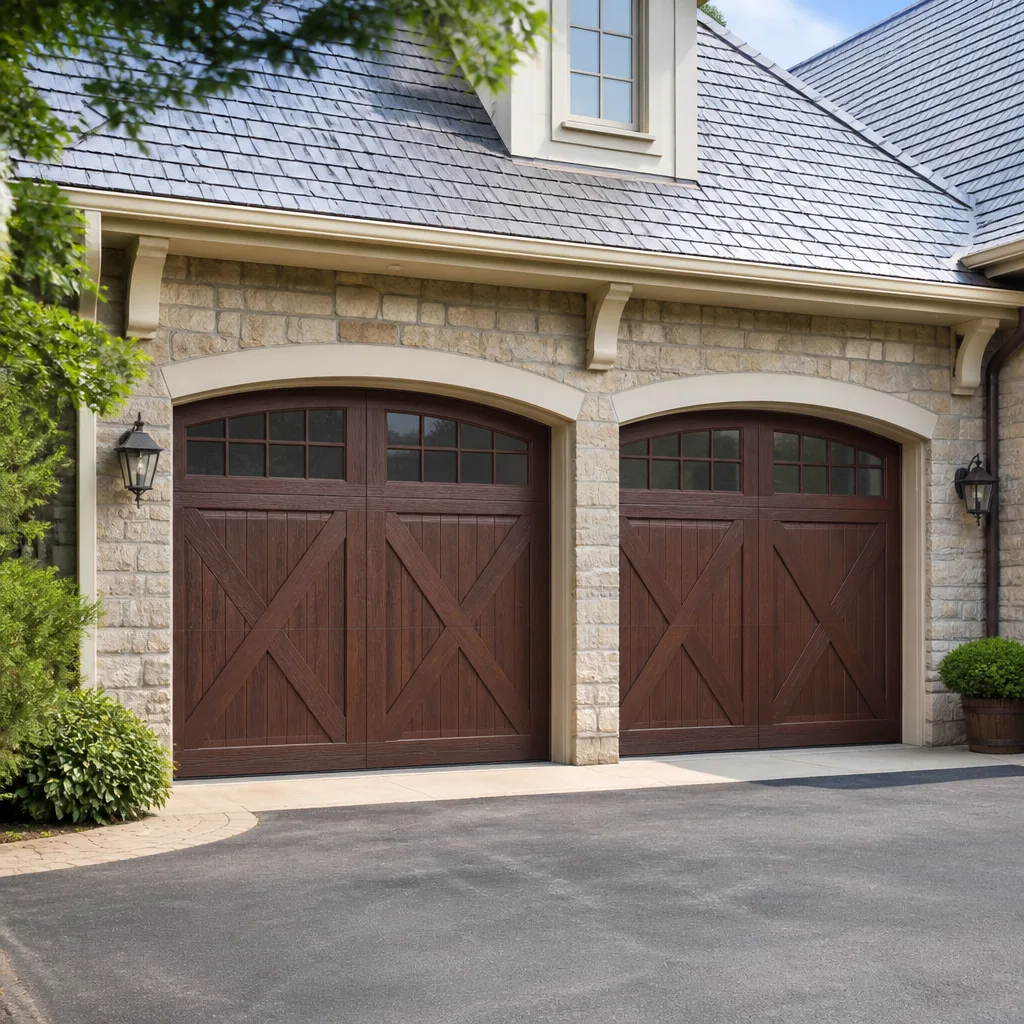 Carriage house
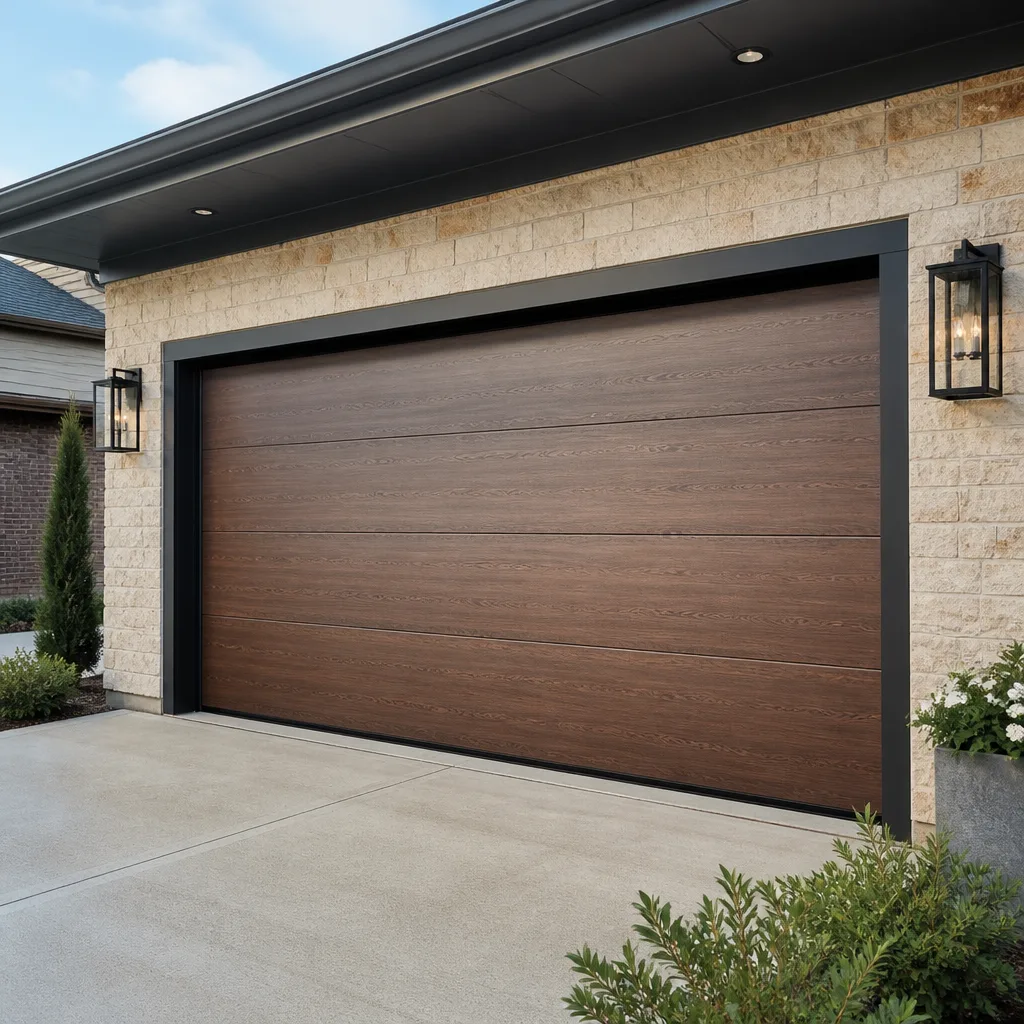 Modern flush
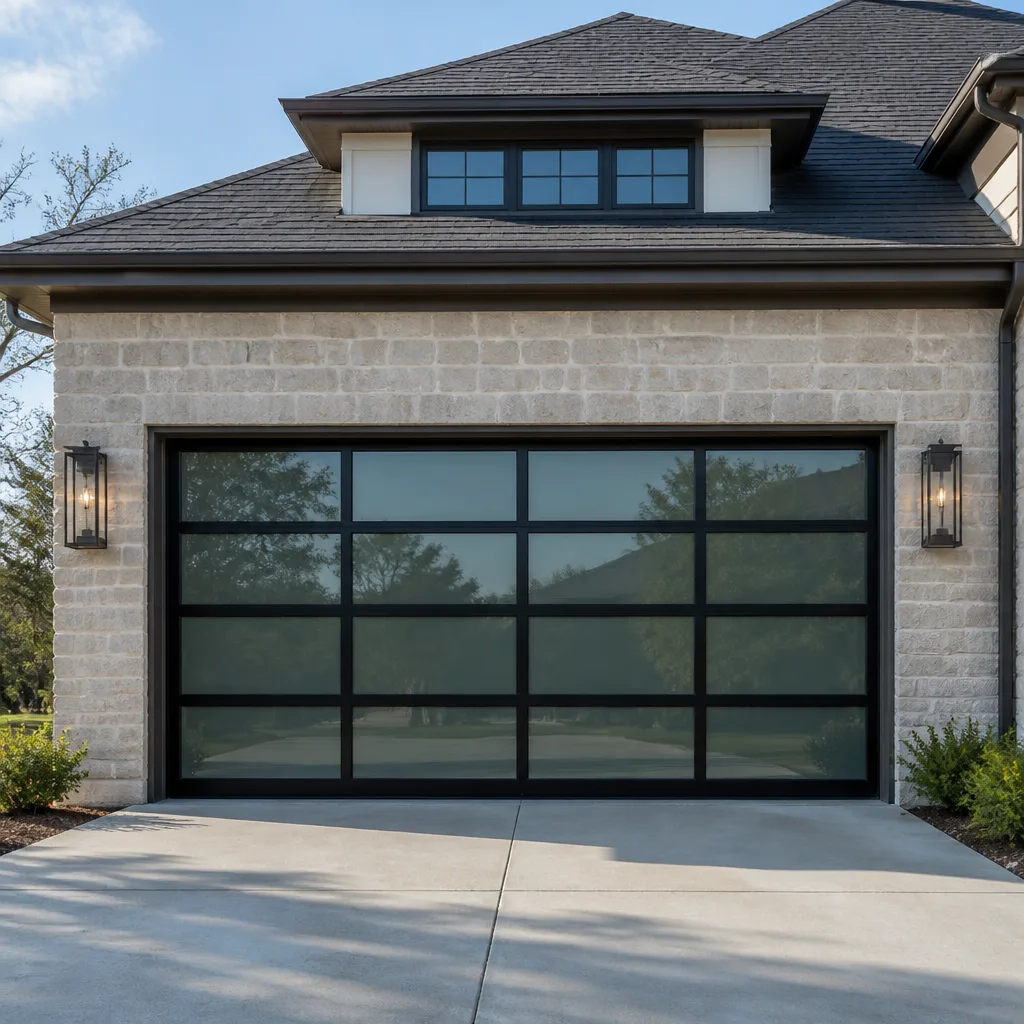 Full-view glass
 LiftMaster openers
 Chamberlain openers
Full 25-point door and opener safety check with every visit - springs, cables, rollers, tracks, and your LiftMaster or Chamberlain opener included
You get a price before we start. It does not change when the pro arrives.
Get your free estimateGarage Door Warning Signs: A Haverhill Homeowner’s Reference Guide
Two doors can make a noise on the same Haverhill street and mean completely different things. One reverses before it reaches the ground – that’s often a sensor knocked out of line, a quick adjustment. The other grinds on the way up with a cable fraying behind the track, and that’s a door that may not open tomorrow. Homeowners hear “my door is acting weird” and have no way to tell a nuisance from a hazard, so they either ignore a real problem or panic over a small one. This guide decodes the symptoms: what each sound, hesitation, and wobble points to, which signs give you a 30-day window to schedule service, and which mean stop using the door today.
Quick Answer
The most important garage door warning signs in Haverhill are a door that reverses before closing, a door that stops partway or moves unevenly, grinding or snapping noises, a visibly sagging panel, and a door that feels heavy to lift by hand – the last two often point to a failing spring. Signs tied to the door or its springs usually need a trained technician, while signs isolated to the opener (a remote that won’t work, a motor that hums without moving the door) are a separate, often smaller repair. When a door won’t close, grinds loudly, or hangs crooked, stop operating it and get it looked at.
Styles & brands we work with
- Raised-panel steel
- Carriage house
- Modern flush
- Full-view glass
- LiftMaster openers
- Chamberlain openers
Table of Contents
- The 12 Warning Signs and What Each One Points To
- Imminent Failure vs. a 30-Day Window
- Is It the Door or the Opener? How to Tell the Difference
- Uneven Spring Tension: The Warning Sign Homeowners Ignore
- The 90-Second Inspection a Technician Runs – and How to Replicate It Safely
- Decoding Garage Door Noises: Grinding, Popping, Squealing and Rattling
- How Haverhill Conditions and Older Housing Shape These Symptoms
- When a Warning Sign Means Repair and When It Means Replacement
The 12 Warning Signs and What Each One Points To
Most garage door problems announce themselves before they fail. The trick is matching the behavior to the part, because a sensor issue and a spring issue look similar from the driver’s seat but sit at opposite ends of the cost and danger scale. Here are the twelve behaviors we hear about most often in Haverhill, each paired with the component most likely behind it.
- The door reverses before it hits the floor. Almost always the safety sensors or their alignment, occasionally a travel-limit setting on the opener. This is the most common and least expensive sign on the list.
- The door goes down, then reverses immediately back up. Usually an obstruction in the sensor beam path, a dirty sensor lens, or sunlight hitting a sensor. Rarely the logic board.
- Slow, labored movement. A tired or mismatched opener motor, or a door that has become heavier than the opener was rated for.
- Grinding on the way up or down. Rollers that have worn flat, dry or bent track, or a torsion tube binding. Left alone, grinding tends to wear the track itself.
- A sharp snap or bang from above the door. A torsion spring breaking. This is loud because it is sudden. Stop using the door.
- Sagging or a visible gap on one side. One spring carrying more load than the other, a stretched cable, or a bent track section.
- The door feels very heavy when lifted by hand. The springs have lost tension or failed. A balanced door should lift with light effort.
- Shuddering or a jerking motion. Worn rollers, a loose hinge, or an opener pulling against a door that is out of balance.
- The opener hums but the door doesn’t move. A stripped gear, a broken drive belt or chain, or a disengaged trolley – an opener problem, not a door problem.
- The door drifts down a few inches after closing. A failing spring or a limit setting that needs adjustment.
- Rattling or a loose metal sound while moving. Loose hinges, brackets or fasteners working free from vibration.
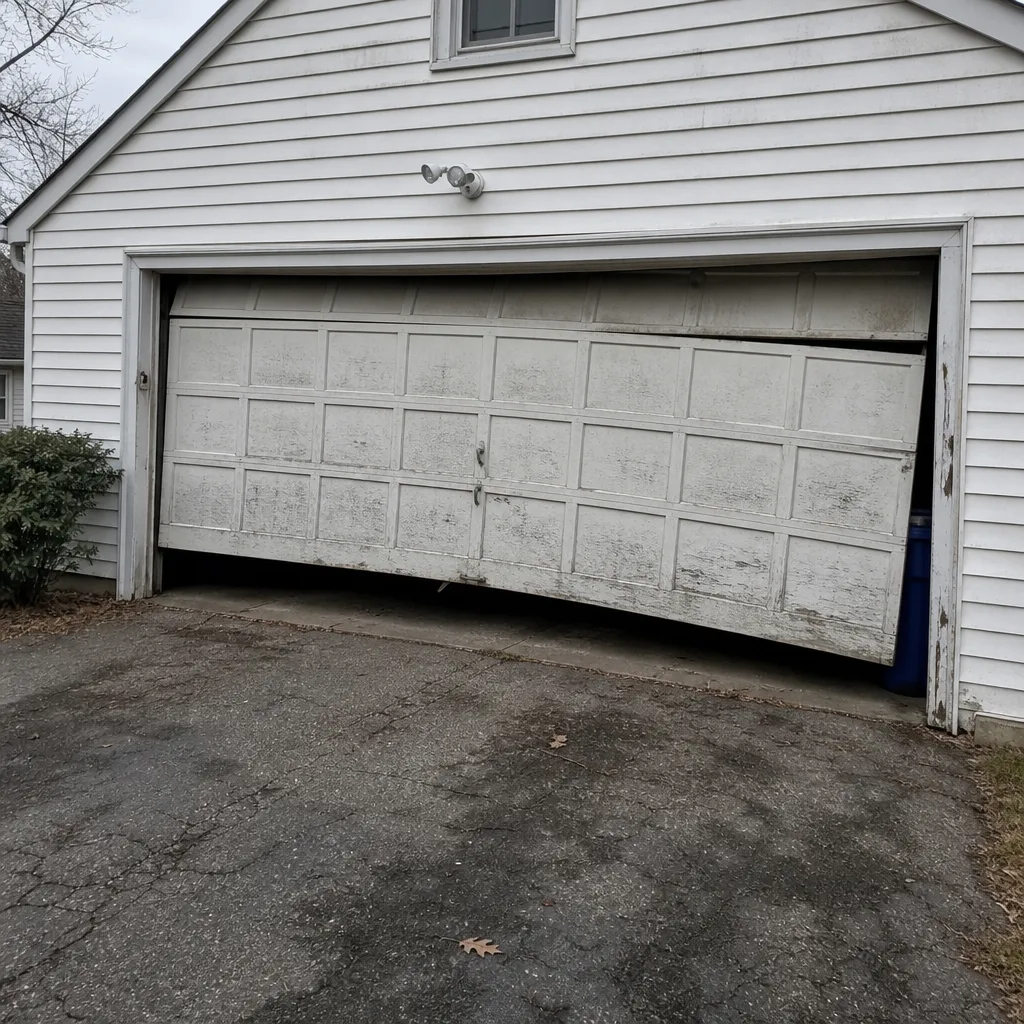
- The door hangs crooked in the opening. Uneven cable tension or one sided spring failure. This is a stop-and-call sign, not a wait-and-see sign.
None of these require a homeowner to climb a ladder or touch a moving part. The value is in the diagnosis: knowing whether you’re looking at a sensor tweak or a spring that’s about to let go tells you whether to schedule service this week or today.
Imminent Failure vs. a 30-Day Window
Not every warning sign is urgent, and treating them all as emergencies is how homeowners end up paying for panic. The useful split is between signs that mean the door could fail or fall in the near term, and signs that give you a few weeks to book a scheduled visit. When a door won’t close or a spring has broken, that’s a stop-now situation. When the door still works but grinds or wobbles, you usually have room to schedule.
Signs that mean stop using the door today
- A loud bang followed by the door refusing to lift – a broken spring.
- A door that hangs crooked or won’t close fully.
- A visible frayed or snapped cable.
- A door that reverses repeatedly and won’t stay down.
- Any door that feels dangerously heavy when you try to lift it by hand.
For these, call before the door is used again. A broken spring on a door that’s still being cycled by the opener can damage the opener and put strain on the cables. If your door won’t move and you need it working, our garage door repair team handles exactly this kind of call.
Signs that give you a 30-day window
- Grinding or squealing that comes and goes.
- Rollers that look worn but the door still tracks straight.
- A remote or wall button that occasionally needs a second press.
- Rattling from loose hardware.
- A door that’s slightly slower than it used to be but still closes fully.
These are worth scheduling within the month, because small mechanical problems tend to wear the parts around them. A worn roller grinds the track. A dry torsion tube wears the bearings. Getting ahead of it usually keeps a repair small.
Is It the Door or the Opener? How to Tell the Difference
This is the distinction that changes who you call and what the repair costs, and it’s the one homeowners most often get wrong. The door is the panels, tracks, rollers, cables and springs – the mechanical assembly. The opener is the motor and drive system that pushes and pulls it. A door problem and an opener problem can produce the same “it’s not working” complaint, but they’re different systems with different failure patterns.
Signs that point to the door
- The door is hard to lift by hand, even with the opener disconnected.
- The door hangs crooked or tracks unevenly.
- Grinding or scraping comes from the tracks or the torsion assembly, not the motor housing.
- The door sags or a panel is bent.
- A spring has visibly broken or the door won’t stay up when raised halfway.
Signs that point to the opener
- The motor hums but the door doesn’t move – a stripped gear or broken drive belt or chain.
- The remote or keypad works intermittently but the wall button always works (or the reverse).
- The door reverses for no reason with no obstruction, often a sensor or logic-board issue.
- The opener runs but the door only moves a few inches, then stops – often a travel-limit setting.
- A smart-home opener app can’t connect, or the opener beeps without moving the door.
Openers from LiftMaster, Chamberlain, Genie and Craftsman all fail in their own ways, and newer app-connected units add connectivity problems to the usual mechanical ones. If the trouble traces to the opener, our garage door opener repair covers the drive systems and the smart-home side alike. If it traces to the door itself, it’s a mechanical repair. Getting the diagnosis right first is why we don’t send a generalist to guess.
Uneven Spring Tension: The Warning Sign Homeowners Ignore
The single warning sign homeowners most consistently ignore is uneven spring tension. It rarely announces itself with a bang. Instead, the door starts to lift a little crooked, one side noticeably heavier, or it drifts down after closing. Because the door still opens, it gets dismissed as “just how it’s always been.” Over time, one spring carries more load than the other, the cables take extra strain, and the whole assembly works against itself.
This matters for two reasons. First, it shortens the life of the springs and the opener, since both are working harder than they should. Second, a spring under uneven tension is closer to failing, and a failing torsion spring is the most dangerous component in the whole garage door system. This is the part most often handed to a generalist, and it shouldn’t be. A torsion spring stores enormous energy, and the tools and technique required to release and re-tension it safely aren’t something a homeowner should attempt, or that a handyman should take on.
A balanced door should stay put when you raise it halfway by hand. If it drifts or feels heavy on one side, that tells you the springs are no longer doing their job evenly – and that’s the moment to stop using the opener to force it and let a trained technician look at it. If a spring has already broken, our garage door spring repair treats it as the safety-critical job it is.
We work on the springs and the doors their tension carries regardless of what’s hanging overhead. Doors from Clopay, Amarr, Wayne Dalton and Raynor are common in Haverhill’s older and newer homes alike, and the spring system on each more or less works the same way. The part doesn’t care which brand is on the panel. The safety does.
The 90-Second Inspection a Technician Runs – and How to Replicate It Safely
When a technician walks up to a garage door, the first 90 seconds are a visual survey that tells them a great deal before anything is touched. You can replicate the safe parts of that walkthrough without tools, without a ladder, and without ever putting your hands near a moving part. Here’s what we look for and what you can check.
Step 1: Look at the door closed, from outside
Does the door sit flush against the floor, or is there a gap on one side? Is the bottom seal even? A consistent gap at one corner points to an unbalanced door or a bent track. A door that closes fine but doesn’t seal is a different, smaller issue – usually a worn bottom seal.
Step 2: Check the springs from a distance
Overhead torsion springs should look intact and even. If you see a visible gap in a spring coil, a bent torsion tube, or two springs that don’t look the mirror of each other, that’s a stop-and-call sign. Don’t reach up or try to move anything.
Step 3: Look at the tracks
Tracks should be straight and evenly spaced along the full run. A dent or a bend, a track that pulls away from the frame, or a noticeable bow is worth flagging.
Step 4: Look at the cables and hinges
Frayed cable strands, a cable hanging slack, or a hinge that has pulled loose are all visible without tools. Never touch a cable under tension.
Step 5: The balance test, done safely
Disconnect the opener (most openers have a manual release handle), raise the door halfway by hand, and let it go. A balanced door stays put. A door that drifts down or feels very heavy on one side is working against you. Then re-engage the opener. If you’re not comfortable with any of this, leave it and have a technician do the check.
Step 6: Listen and watch from outside the door path
Cycle the door once and watch from the side, not under it. Listen for grinding, popping or scraping, and watch whether the door moves evenly or jerks. Anything that sounds like grinding likely means a mechanical part is wearing.
This is the same survey we run before quoting any repair, and it’s why a diagnostic in Haverhill is quick and precise. Our technicians have up to 8 years of experience reading exactly these signs.
Decoding Garage Door Noises: Grinding, Popping, Squealing and Rattling
The type of noise often points straight at the component. Grinding is friction – a worn part rubbing against another. Popping or a sharp crack is loaded metal letting go. Squealing is metal-on-metal without lubrication. Rattling is hardware working loose. Each sound narrows the search.
Grinding
Usually worn rollers or a bent or dirty track. Rollers that have worn flat stop rolling and start dragging, which wears both roller and track. Left long enough, grinding means replacing track, not just rollers.
Squealing or a high whine
Dry rollers, dry torsion bearings, or a torsion tube that’s lost lubrication. This is one of the cheaper fixes on the list if caught early.
Popping or a single loud crack
A torsion spring breaking, or a cable snapping. This is the one symptom that should stop the door immediately. There’s no “wait and see” with a bang from above the door.
A rattle or loose metal clatter while moving
Loose hinges, brackets or fasteners shaken free from vibration. Sometimes an opener’s drive chain or rail has loosened from its mounts.
A motor hum with no movement
Stripped gear in the opener or a broken drive belt or chain. The motor runs but nothing connects it to the door. This is an opener repair, not a door repair.
How Haverhill Conditions and Older Housing Shape These Symptoms
Haverhill’s mix of older homes and newer builds produces a particular pattern of door problems. The older housing stock – the kind of two and three bay garages common in neighborhoods like Mount Washington and the Bradford area near the river – often has doors and hardware that have worked hard through many freeze-thaw cycles. The newer builds tend to have the smart openers and multi-panel doors. Each brings its own set of warning signs.
Freeze-thaw matters here. Over a New England winter, temperature swings expand and contract the metal track, the torsion tube, and the door panels. That expansion is gentle but relentless, and over years it can bow a track slightly, back out a screw, or loosen a hinge. When spring arrives, some of those doors start grinding on the uphill side because the track has shifted a fraction. It’s usually a simple adjustment, but catching it early keeps it from wearing the rollers.
Older wood and steel panels also respond to seasonal moisture. A wood panel that swells and binds in spring can throw off the door’s balance in the same way a failing spring would. The symptoms are similar: slow movement, uneven lift, sometimes a binding sound. A technician diagnosing a door in Haverhill can usually tell the difference quickly by looking at the tracks and testing balance – a swollen panel binds in the track, while a spring issue shows when you disconnect the opener.
Older openers have their own pattern too. Craftsman units still working in some Haverhill garages are reliable, but their travel-limit settings drift over years, and worn gears are common. Newer LiftMaster and Chamberlain myQ openers bring connectivity quirks – a sensor that falls off Wi-Fi, an app that won’t respond – which are often fixed at the opener rather than the door. Brand-fluent diagnosis matters: knowing what a Clopay panel door is likely to do versus a Raynor panel saves the back-and-forth of trial and error.
When a Warning Sign Means Repair and When It Means Replacement
Not every warning sign is a call to replace the door, and nobody wants to be sold a new door over a worn roller. The honest split: most signs are repairs, and replacement makes sense when the cost of repair approaches the cost of replacement or the door itself is failing structurally.
Signs that point to repair
- A single broken spring or a spring that’s lost tension.
- Worn rollers, loose hinges, or a bent track section.
- An opener with a stripped gear or a bad sensor.
- A door that’s out of balance but otherwise sound.
- Loose hardware and a noisy track.
Signs that point toward replacement
- Multiple panels that are dented, cracked or bent.
- A door that’s out of balance and the cost of new springs plus track work runs close to a new door.
- Rotting wood or rusted-through steel panels.
- An opener that’s failed repeatedly and is old enough that the next repair won’t hold.
- A door that’s simply the wrong size or style for the opening and has been fighting it for years.
The right call depends on the specific door, and honest counsel matters more than a sale. We repair what’s worth repairing and tell you plainly when replacement makes more sense. There’s no incentive to push one over the other, because we handle both. If replacing an opener is the answer, a new LiftMaster or Chamberlain unit can be matched to the door. If a panel door from Amarr or Wayne Dalton needs to go, we can quote a new installation. For the full arc, see Haverhill Garage Door Repair Pros and the garage door repair range.
Common Mistakes to Avoid
- Ignoring a crooked door because it still opens. A door hanging unevenly in Haverhill is often working against one spring, and forcing it with the opener accelerates wear. Stop using it and get it looked at.
- Assuming every noise means a new door. Grinding and squealing are usually worn rollers, a track issue, or dry bearings – small repairs. Replacing the door over a $15 roller is the most common oversell we see in Haverhill.
- Trying to “help” a heavy door by lifting it while the opener runs. A heavy door is a spring problem, and lifting it by hand puts you in the path of a part that can fail under load. Leave it to a trained technician.
- Calling a generalist handyman for a spring repair. Torsion springs are the most dangerous part of the system, and a generalist who’s replaced a faucet isn’t the person for this. It’s a specialized, safety-critical job for a reason.
- Assuming the sensor is bad when the door won’t close. Often it’s just an obstruction in the beam path, a dirty lens, or sunlight hitting one sensor. Before you replace it, check the simplest cause.
- Treating a single loud bang from above the door as a normal noise. That bang is usually a torsion spring breaking, and a door being cycled by its opener with a broken spring can damage the opener too. Stop the door and call.
- Letting a slow-moving door go for a whole season. Slow movement in Haverhill often turns into a bigger track or roller problem if ignored, because the friction that slows it also wears the parts around it.
See the difference
 Before
 After
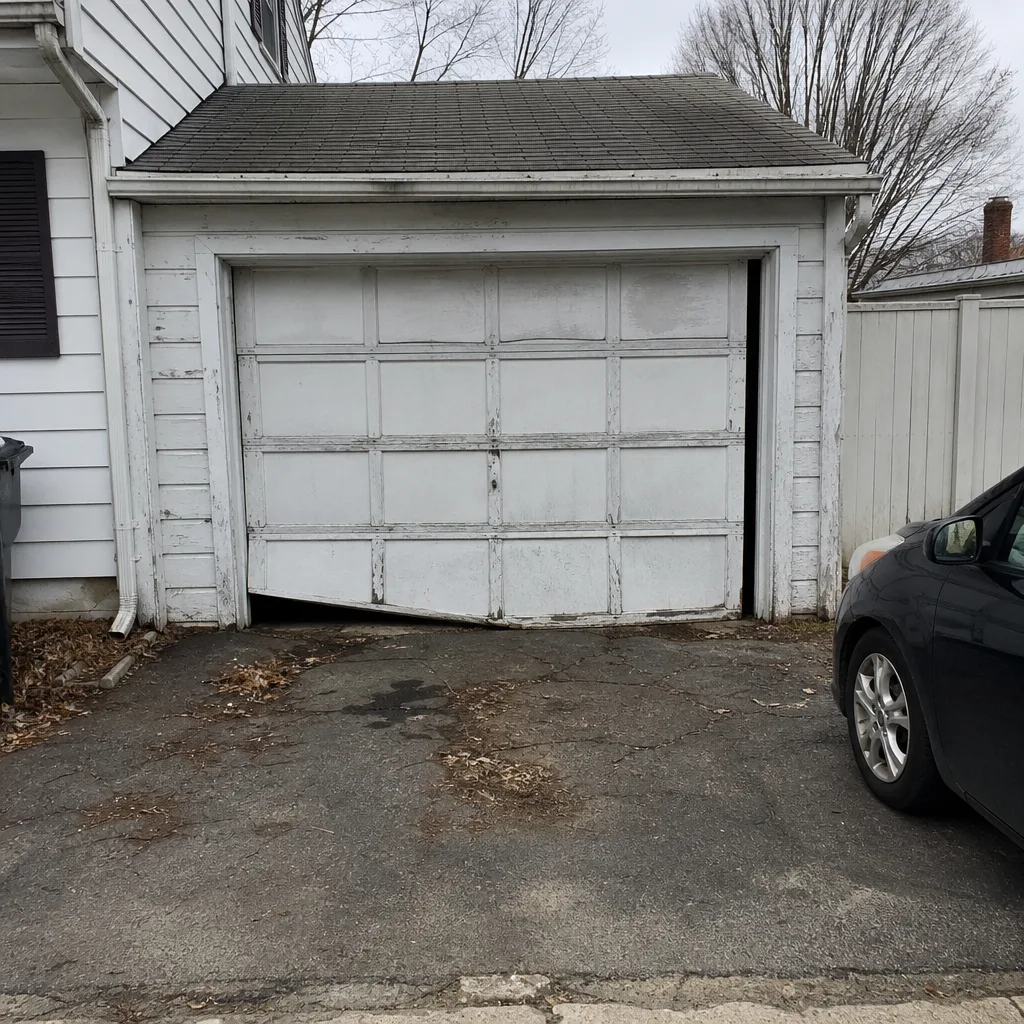 Before
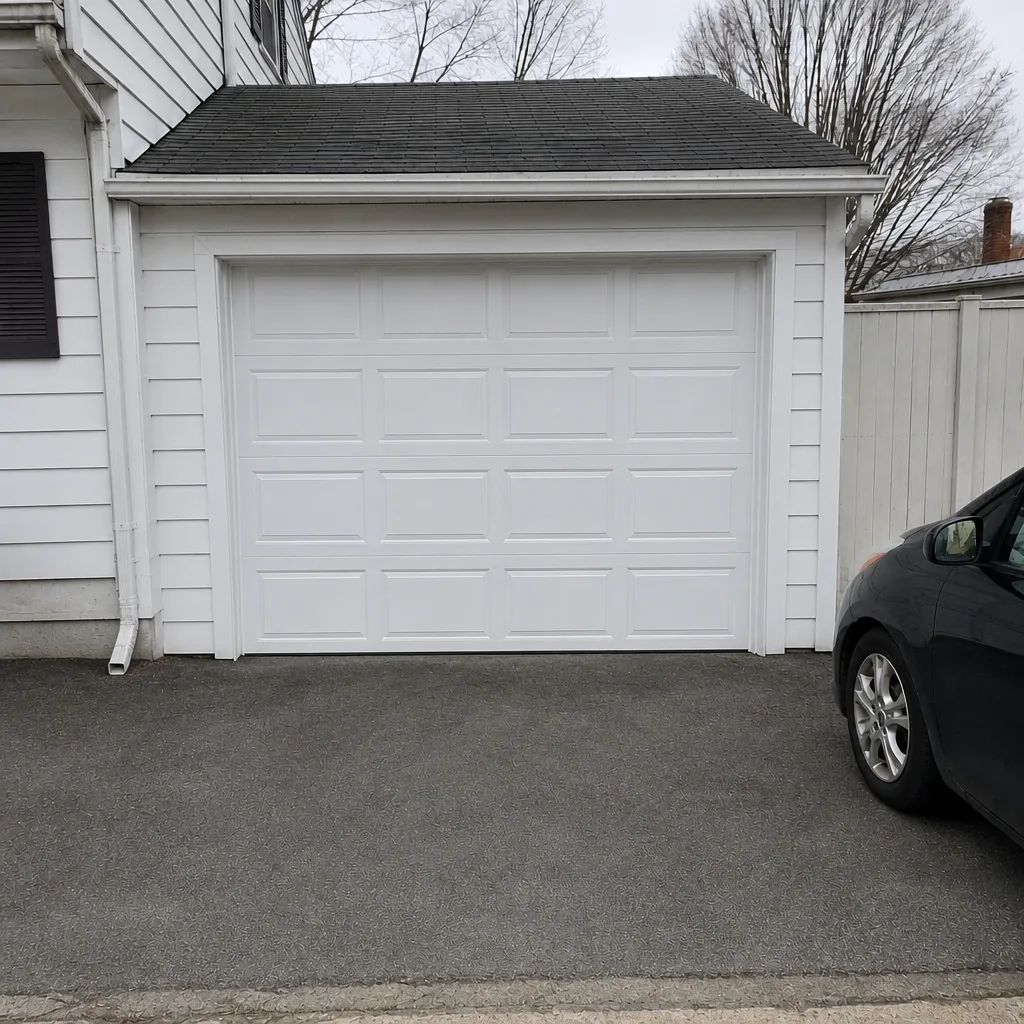 After
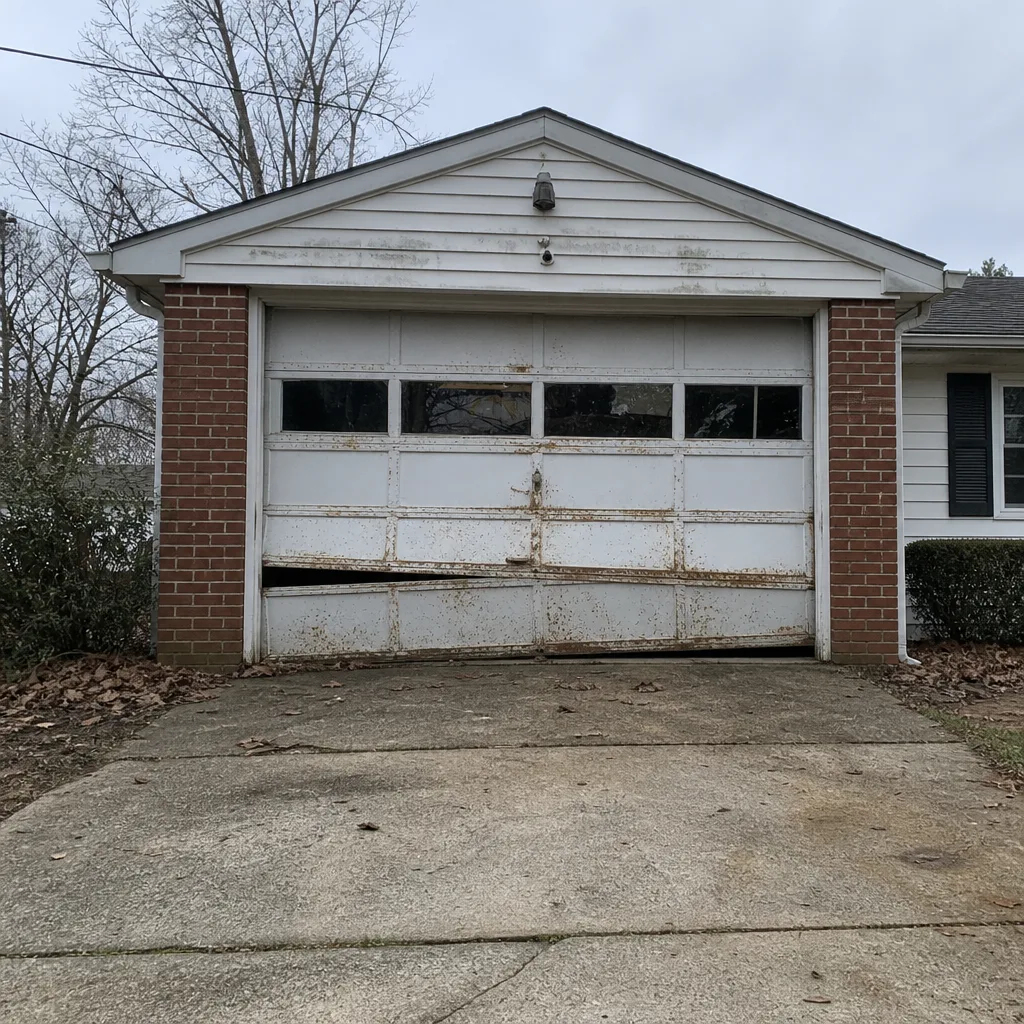 Before
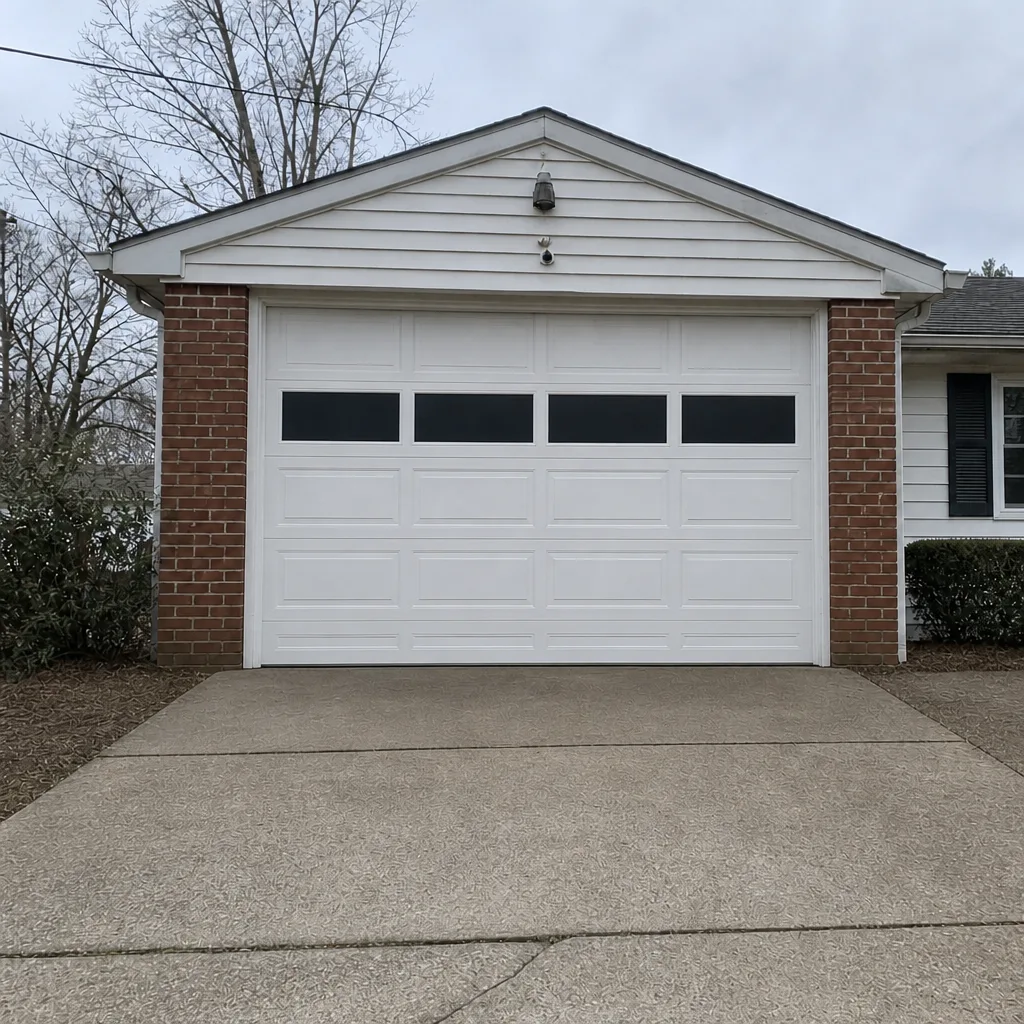 After
When to Call a Professional
Some warning signs are a quick look and a small adjustment; others are a stop-now call. Call a professional when the door hangs crooked, a spring has visibly broken or lost tension, the door is heavy to lift by hand, a cable is frayed or slack, the door reverses repeatedly and won’t stay down, or you hear a bang from above the door. Also call when the opener hums without moving the door, or when grinding persists after a visual check, because those can point to parts that need replacing rather than adjusting. And call when you’re simply not sure – a technician’s 90-second survey beats a guess.
When the door won’t move, we move fast. Haverhill Garage Door Repair Pros offers free estimates in Haverhill – call (877) 792-5986. We answer 24/7. Fast dispatch from 7am to 7pm, Sunday through Friday. The price is set per job by the written estimate and agreed before any work starts.
Frequently Asked Questions
The most common are a door that reverses before closing, a door that stops partway or moves unevenly, grinding or snapping noises, a sagging panel, and a door that feels heavy to lift by hand. The last two often point to a failing spring, while a door that reverses before it closes usually points to the safety sensors or their alignment. When any of these show up in Haverhill, stop operating the door and get it looked at.
Disconnect the opener and try to lift the door by hand. If it’s heavy or hangs crooked, the problem is the door and its springs. If the door lifts easily by hand but the motor hums without moving it, the problem is the opener. That one test narrows it, and a technician can confirm on site.
It usually means the safety sensors aren’t working. That’s often an obstruction in the beam path, a dirty sensor, a knocked-out alignment, or sunlight hitting a lens. Occasionally it’s a travel-limit setting. This is one of the most common and least expensive issues, and worth checking before you assume the sensor needs replacing.
The cost depends on the specific problem: sensor adjustments, roller and hinge replacements, and opener repairs sit at the lower end, while a broken spring replacement costs more because it’s a specialized, safety-critical job. We give a written estimate before any work starts, so the price is agreed up front. Call (877) 792-5986 for a free estimate.
For a door that won’t close or a broken spring, we prioritize the call and can often reach you same day. Call (877) 792-5986. We answer 24/7. Fast dispatch from 7am to 7pm, Sunday through Friday. A call outside dispatch hours is booked into the next opening.
No – the written estimate is the price. We quote based on what we find during the visit, we agree on that number with you, and no work starts until it’s agreed. If the diagnosis changes because a part isn’t what we expected, we tell you before doing it, not after.
The Bottom Line
Warning signs are information, not panic. A door that reverses is usually a sensor, a door that grinds is usually a roller or track, and a door that hangs crooked or has gone quiet after a bang is a spring issue that needs a technician. The difference between an expensive repair and a small one is usually timing, and unusual symptoms are worth catching early. In Haverhill, freeze-thaw cycles and older housing make some of these signs more common, so it helps to know what you’re looking at. When the door tells you something, listen and call. Haverhill Garage Door Repair Pros offers free estimates – call (877) 792-5986.
Written by the team at Haverhill Garage Door Repair Pros.